Yes. A keyword report for faymas.in in the US market returns eight terms, and not one of them contains the word faymas: ai image, ai images, ai photos, ai picture, ai image generation, ai images generation, image ai and face identity. We then read the site's own sitemap to see whether that was a fair reading. It is. Of 14,524 indexed URLs, 14,465 are prompt leaf pages, and every single one of those carries an eight-character hex suffix — the signature of a machine-generated slug. Twelve slugs in the entire index contain the word faymas. That is 0.08%.
This audit reads a third-party keyword report against the competitor's own public sitemap and public pages. No ranking data was measured by us.
Google is not misreading the site. It is reading exactly what is there.
The eight terms
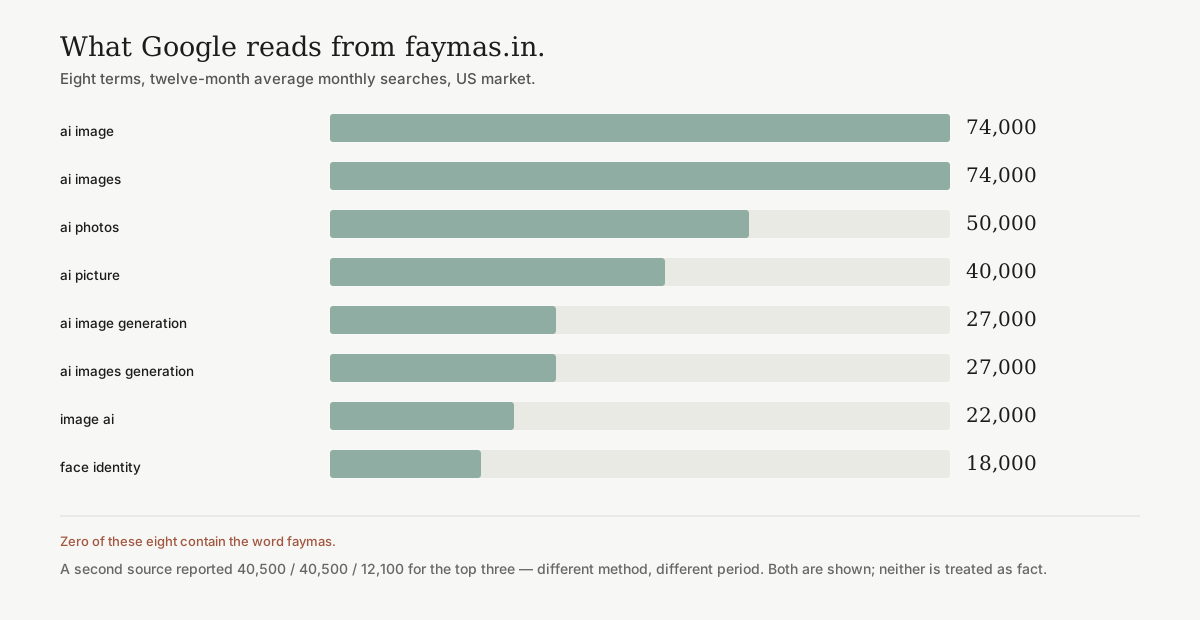
Two different tools reported volumes for these terms and their figures do not agree, so both are listed and neither is presented as fact. The first column is a twelve-month average with the cost of buying the top of the page; the second is a recent-month figure with what advertisers actually paid per click.
| Term | Monthly searches (12-mo avg) | Competition | Top-of-page bid | Recent month (2nd source) | Actual CPC (2nd source) |
|---|---|---|---|---|---|
| ai image | 74,000 | medium | $7.06–39.16 | 40,500 | $0.91 |
| ai images | 74,000 | medium | $7.06–39.16 | 40,500 | $0.91 |
| ai photos | 50,000 | medium | $6.99–39.16 | 12,100 | $0.78 |
| ai picture | 40,000 | medium | $8.55–38.89 | not reported | not reported |
| ai image generation | 27,000 | low | $7.81–43.12 | not reported | not reported |
| ai images generation | 27,000 | low | $7.81–43.12 | not reported | not reported |
| image ai | 22,000 | medium | $8.55–43.84 | not reported | not reported |
| face identity | 18,000 | low | $1.56–18.72 | not reported | not reported |
Every one of these is a category term. They describe a kind of software, not a brand. A site that ranks for them is being read as a supplier of AI images, which is a crowded room with expensive seats.
What the sitemap says back
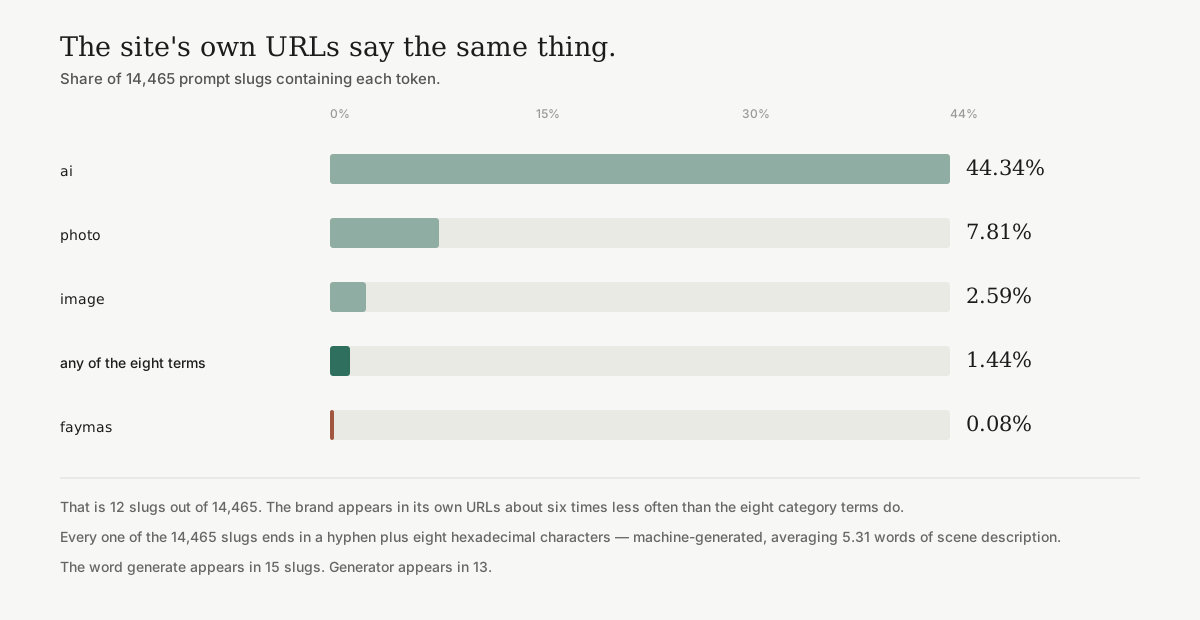
We pulled the index and counted tokens across all 14,465 prompt slugs. The eight terms above are reported with spaces; slugs use hyphens, so each was tested in hyphenated form.
| Token in slug | Slugs containing it | Share of 14,465 |
|---|---|---|
| ai | 6,414 | 44.34% |
| photo | 1,129 | 7.81% |
| image | 374 | 2.59% |
| ai-image | 117 | 0.81% |
| ai-photo | 82 | 0.57% |
| face-identity | 8 | 0.06% |
| image-ai | 1 | 0.01% |
| any of the eight | 208 | 1.44% |
| faymas | 12 | 0.08% |
So the brand appears in its own URLs about six times less often than the eight category terms do, and both numbers are rounding errors. The index is not built around either.
Every URL is machine-named
Here is the part that explains the whole picture. All 14,465 prompt slugs — 100%, no exceptions — end in a hyphen followed by exactly eight hexadecimal characters. Strip the suffix and what remains averages 5.31 words, and reads like a caption:
thoughtful-young-man-in-maroon-shirt-standing-in-an-urban-park-at-night-2c11fe92golden-hour-gentleman-f849902dluxury-celebrity-mirror-selfie-cinematic-trio-fe6e69cfkuldeep-meena-9795996b
These are descriptions of individual pictures, generated from whatever the uploader wrote, with a hash appended to keep them unique. Nobody chose them. There is no keyword plan in 99.6% of this site, because there is no human in the loop for 99.6% of it.
That produces a specific failure. Google reads 14,465 pages about one photograph each, and no page about AI image generation as a subject. The word generate appears in 15 slugs. generator appears in 13.
The categories do not match either
The ten hand-built category pages are named by subject matter, and none of them is one of the eight terms:
| Category slug | Matches a Google term? |
|---|---|
| photography | no |
| illustration-3d | no |
| fun-memes | no |
| food-drink | no |
| wallpapers | no |
| social-media | no |
| product-brand | no |
| ui-graphic | no |
| poster-design | no |
| logo-identity | no |
Ten categories, zero overlap with what the site is actually being read for. The taxonomy describes kinds of output; the demand is for kinds of tool.
The pages that do target the keyword are the same page
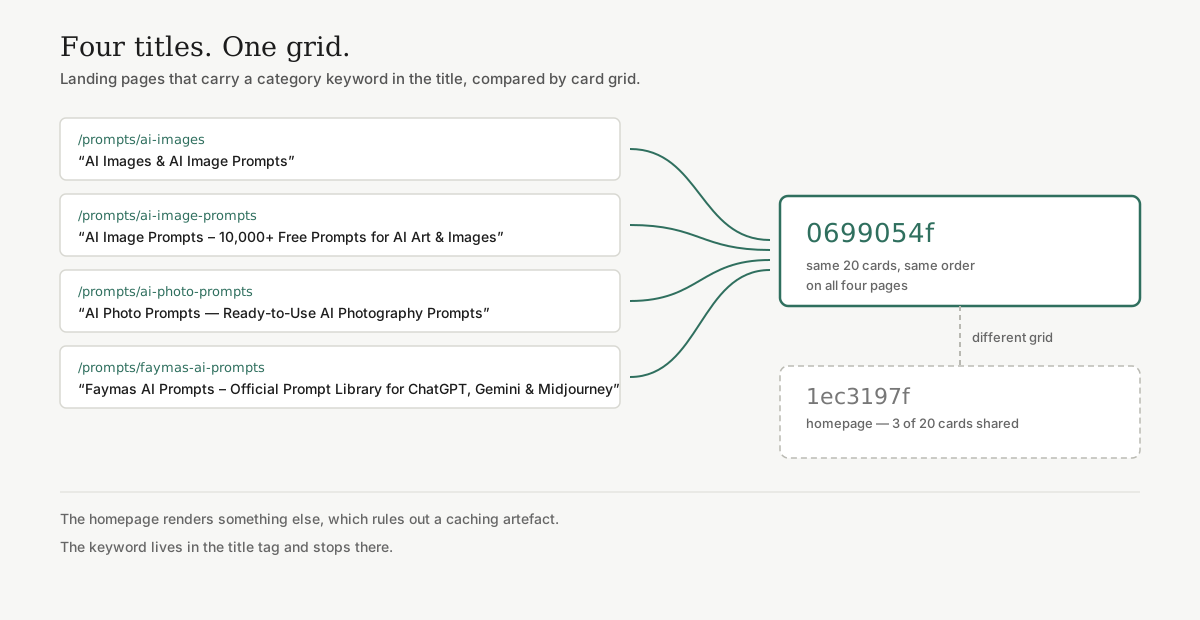
The site has made an attempt. Twelve hand-made /prompts/ pages exist, and several carry category terms in the URL: /prompts/ai-images, /prompts/ai-image-prompts, /prompts/ai-photo-prompts. These are the pages that should be carrying the demand.
We loaded four of them and compared the card grids. Each has a distinct, keyword-targeted title:
| URL | Page title | Cards | Grid signature |
|---|---|---|---|
| /prompts/ai-images | AI Images & AI Image Prompts | 20 | 0699054f |
| /prompts/ai-image-prompts | AI Image Prompts – 10,000+ Free Prompts for AI Art & Images | Faymas | 20 | 0699054f |
| /prompts/ai-photo-prompts | AI Photo Prompts — Ready-to-Use AI Photography Prompts | 20 | 0699054f |
| /prompts/faymas-ai-prompts | Faymas AI Prompts – Official Prompt Library for ChatGPT, Gemini & Midjourney | Faymas | 20 | 0699054f |
Four different titles. One identical grid — the same twenty cards in the same order. The homepage grid is different (signature 1ec3197f, sharing only 3 of its 20 cards with these pages), which rules out a caching artefact: these four pages genuinely render the same feed to each other, and something else to the front door.
So the targeting exists in the title tag and stops there. The body of the "AI Images" page is the same twenty recent prompts you get on the "Faymas AI Prompts" page.
Why this is the worse outcome
A site with no brand association has a clean slate. That is not what this is. faymas.in has spent 14,465 pages teaching crawlers that it is a supplier of AI images, and has twelve pages suggesting it is a brand called Faymas.
The economics make it worse. Every one of those eight terms is a category term with a commercial bid attached — $7 to $43 for the top of the page on some of them. Ranking for category terms means competing against every tool in the category, on the category's terms, at the category's prices. A brand term would cost a fraction of that and convert better, because the person typing it already wants you.
There is a second cost that is easy to miss. Category demand is not loyal. Someone searching "ai photos" will take the first result that works. Someone searching "faymas" is already looking for you. A site that wins the first kind of query has rented traffic; a site that wins the second owns it.
What this check cannot tell you
- The eight terms and their volumes come from third-party tools reported to us. We did not crawl a keyword database ourselves, and the two sources disagree on volume by roughly 2x for the terms both reported.
- We tested the eight terms against slugs, not against page body text. A slug is a weak signal on its own; it is the 100% hash-suffix finding that makes it reliable here.
- Whether Google actually ranks faymas.in for any of these terms, and where — we did not measure rankings, and associating a term with a domain is not the same as ranking for it.
- The four
/prompts/grids were sampled once. Category feeds on this site have been observed to re-randomise between loads, so a single snapshot cannot prove the pages are always identical — only that they were identical at the moment we looked. - That 100% of slugs end in a hex suffix is consistent with automated generation. We did not find code or documentation confirming the generator.
What would flip it
Ten category pages answering the eight terms would do it — a real hub on AI image generation with its own body text, its own internal links, and a grid that is actually filtered rather than re-shuffled. Thirty of those pages would start to move the reading.
Until then the answer holds: Google reads faymas.in as an AI image site because it is one, by volume, by slug, and by its own choice of titles. The brand is a signature on the door, not the thing inside.