Save the exact prompt that produced your selected output, and keep the two together. Before sharing on Faymas, check that the text is complete and still matches the images. A polished rewrite is a different version; do not silently attach it to an earlier result.
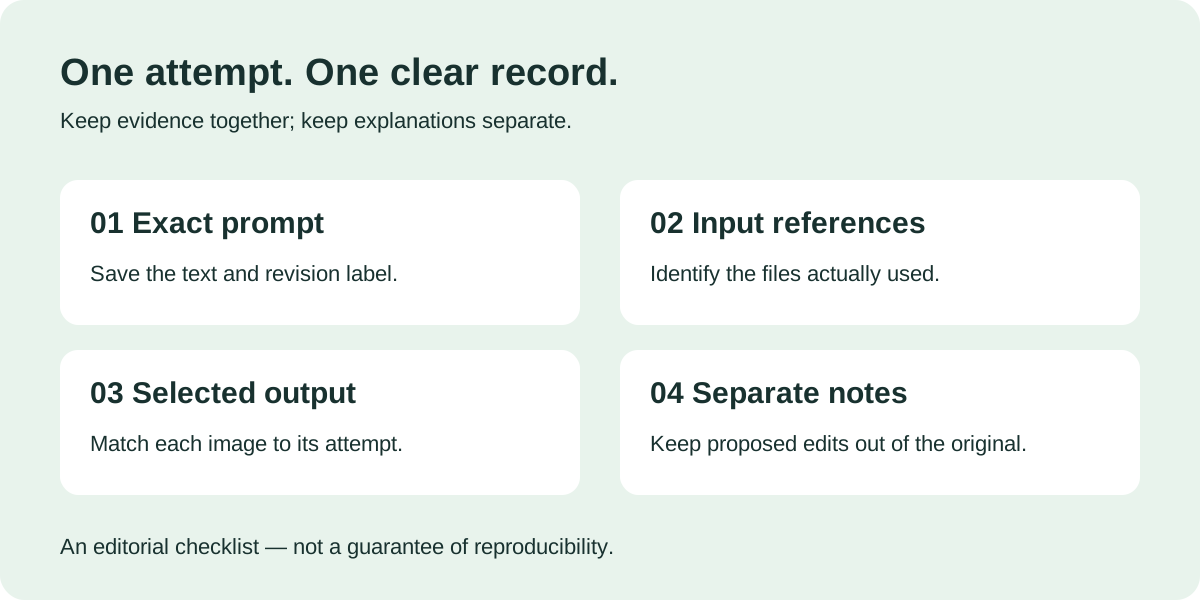
What the publishing guidance requires
Faymas's posting guide asks creators to provide the complete generation prompt and check for missing details or accidental edits. It allows up to four images for a prompt and asks for meaningful variation. Its creator guidelines address accurate prompts, duplicate images and permission to publish.
Those requirements describe the submission. The record below is our own optional method for keeping your working files organized. It is not a claim that Faymas requires these exact fields.
Keep one folder for one recorded attempt
Give the attempt a short identifier. Put the exact text in a plain text file and keep the selected output alongside it. If you used references, identify those files in the same record. Record the tool and any settings you can actually see. Leave unavailable information marked unknown instead of reconstructing it from memory.
A useful record has four parts:
- Text: the exact generation prompt and a revision label.
- Inputs: reference filenames and what each supplied.
- Output: the image filename selected for sharing.
- Notes: observations, explanations and proposed edits, kept separate from the generation text.
If you revise the prompt, make a new text version. If you generate again, record a new output. This makes it possible to tell which words belong to which result without assuming that an edited prompt would have produced the earlier image.
For example, use a neutral folder label such as attempt-01, then keep prompt.txt, output.png and notes.txt inside it. These filenames are a suggested organization scheme, not files from a real generation test. In the notes, distinguish what you observed from what you intend to try next. Before selecting an image for a post, open its paired text file rather than choosing the newest prompt in your workspace. If the pair is uncertain, mark it unresolved and leave that output out of the submission until you can establish the match.
Inspect formatting without rewriting history
One inspected lake-portrait prompt specifies a vertical 9:16 composition, framing and headroom. Those details belong to the generation instructions. Keep such constraints with the prompt rather than trying to reconstruct them later from the finished image.
Our recommendation: preserve the text actually used in your private record first. If you remove formatting artifacts before a new generation, label that cleaned text as a new revision. Do not claim a generation test you did not perform.
Several pictures do not remove the need for a record
An inspected mirror-portrait page presents three image links with one prompt. We did not independently verify the generation history of those images. For your own submission, keep the mapping between each selected output and its recorded attempt, then check that the platform's submission format accurately represents your work.
Do not fill the available image slots simply to reach four. Choose images that show meaningful differences. A maximum is not a target.
Before you publish
Check that the title describes the actual result, the text-output pair is correct, and the category, filter and tags match the subject. Confirm that you have the right to publish the material. Then read the preview once as a new visitor: can they tell what the prompt requests without relying on your private notes?
Does this guarantee reproducibility?
No. A record helps you document an attempt. We have not measured repeatability or compared generation performance. Preserve the evidence you have and label what remains unknown.