How do you guys even prompt?!?
Start by saying what you want the model to do, what material it should use, and what the finished answer should look like; you do not need a special persona or a purchased prompt to write that first request. Use a small task whose result you can check yourself. Our starter card has a task line, an input line, an output line, and a check line. As a fictional practice exercise, your task could be turning a short set of meeting notes into action items. The input is the notes you provide, the output is a list organized by owner, and the check is that an owner missing from the notes remains unspecified. You can express that in ordinary language without inventing an elaborate professional role for the model. The same card works as a planning aid for a Faymas-style image request: describe the subject and scene, identify any reference image you intend to supply, state the composition you want, and name a visible detail you will inspect afterward. That is an example of organizing your request, not a tested claim about any image tool's capabilities. After receiving a result, compare it with the check line before polishing the wording. If the result misses your intended structure, revise that instruction and keep the previous request so you can see what changed. If essential information was absent, provide it or ask the model to identify the missing input rather than inviting it to invent an answer. For workplace practice, use fictional or already approved material and follow your organization's rules for the tool you are using. A beginner exercise should not require uploading confidential client documents. If your real task involves professional decisions, keep the exercise limited to a result you can independently review; a fluent response is not evidence that the underlying content is correct. Save the request only when you can describe why it was useful and what still needed correction. This turns your first prompt into a modest, reviewable attempt instead of a search for a perfect formula.
Why the hell you guys buy AI prompt pack?
A prompt pack is worth considering only when its usable instructions solve a specific task you cannot already complete adequately with a simple request; the number of prompts in the download is not enough to justify buying it. Before paying, write the job you want done in one sentence and describe what an acceptable result would contain. For a Faymas-style portrait project, that might mean a clearly framed subject, the intended setting, and room for a later crop. These are example acceptance criteria, not results from a tested pack. Next, inspect an available sample and separate its editable inputs from its decorative wording. Mark which details you supply, which reference images it expects, and which settings depend on a particular tool. If those requirements are missing, record them as unknown rather than assuming the pack will work in your account. Then compare the sample with your own plain-language request using the same task and inputs, if you have access and choose to run a test. Keep both requests and outputs; do not substitute a seller's showcase image for your own result. Our suggested decision record contains a task, a sample source, required inputs, the tool used, an observed mismatch, and a reason to keep or reject the material. Leave every observation field blank until you actually try it. Judge whether the sample reduces a real obstacle, such as a missing composition instruction, rather than whether it sounds sophisticated. If your basic request already meets the criteria, keep it and avoid adding a collection you have no immediate use for. If a sample helps, save only the useful pattern with a note explaining when to use it again. We have not purchased or benchmarked the packs a reader may be considering, so there is no verified price, success rate, or time-saving figure to report. Use the record to make your own bounded decision, not as a promise that paying produces better images. For a concrete reading check, compare the linked birthday portrait and four-portrait poster: the first excludes text, while the second asks for a birthday heading but excludes a name and date. A theme label therefore does not tell you whether a sample fits your intended wording.
Can you actually make money from selling Specialised AI promts?
Selling specialised prompts may or may not earn you money; we have no verified sales results or earnings forecast to report. Treat a proposed product as an untested offer until you have evidence that it solves a defined customer's task and someone actually chooses to pay for it. Begin by naming the deliverable, the intended user, and the conditions needed to use it. For a Faymas-related image workflow, a deliverable might include editable prompt text, an explanation of reference-image roles, and a blank output-review sheet. This is an illustrative package description, not a product we have sold or a statement about what customers will buy. Our suggested evidence record pairs each promised benefit with a demonstration, its required inputs, and a limitation you can explain. If you claim a workflow is easier to reuse, show how someone finds the relevant template and identifies the fields to change; do not replace that demonstration with a large prompt count. Keep untested benefits marked untested. Before attaching someone else's examples or instructions to an offer, establish that you have permission to use that material and make your own contribution clear. Avoid presenting a platform's name as an endorsement. When an actual sale occurs, record the amount received and the costs you actually incurred. A simple internal calculation is receipts minus refunds, transaction charges, and direct delivery costs. Keep your time and other overhead separately visible; this limited calculation is not a complete accounting or tax result. Do not insert assumed prices, conversion rates, or imaginary customers to turn a blank worksheet into an earnings forecast. If nobody has purchased, say that revenue has not been demonstrated. If people request changes, record the request alongside the example that caused confusion rather than assuming every question is buying intent. The useful next step is to make one specific offer understandable and reviewable, then document the response honestly. A prompt pack alone is not evidence of demand, and a discussion asking about revenue is not proof of a business outcome. Faymas also asks published prompts to match their outputs and forbids presenting another creator’s work as your own; those publishing requirements do not establish that a separate paid offer will sell.
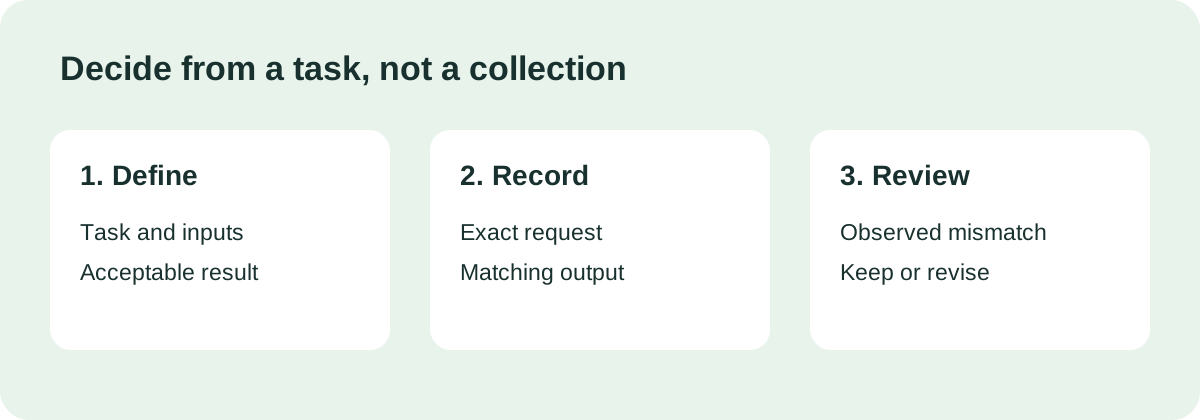
Download the blank task and decision card
Have you ever actually bought a template a workflow or a prompt pack?